Every year the agencies that count scams publish bigger numbers, and every year they warn that most losses never reach them. This is the state of the scam economy at the end of 2026, from the sources that measure it: the Global Anti-Scam Alliance, the FBI, the US Federal Trade Commission, UK Finance and Australia's National Anti-Scam Centre.
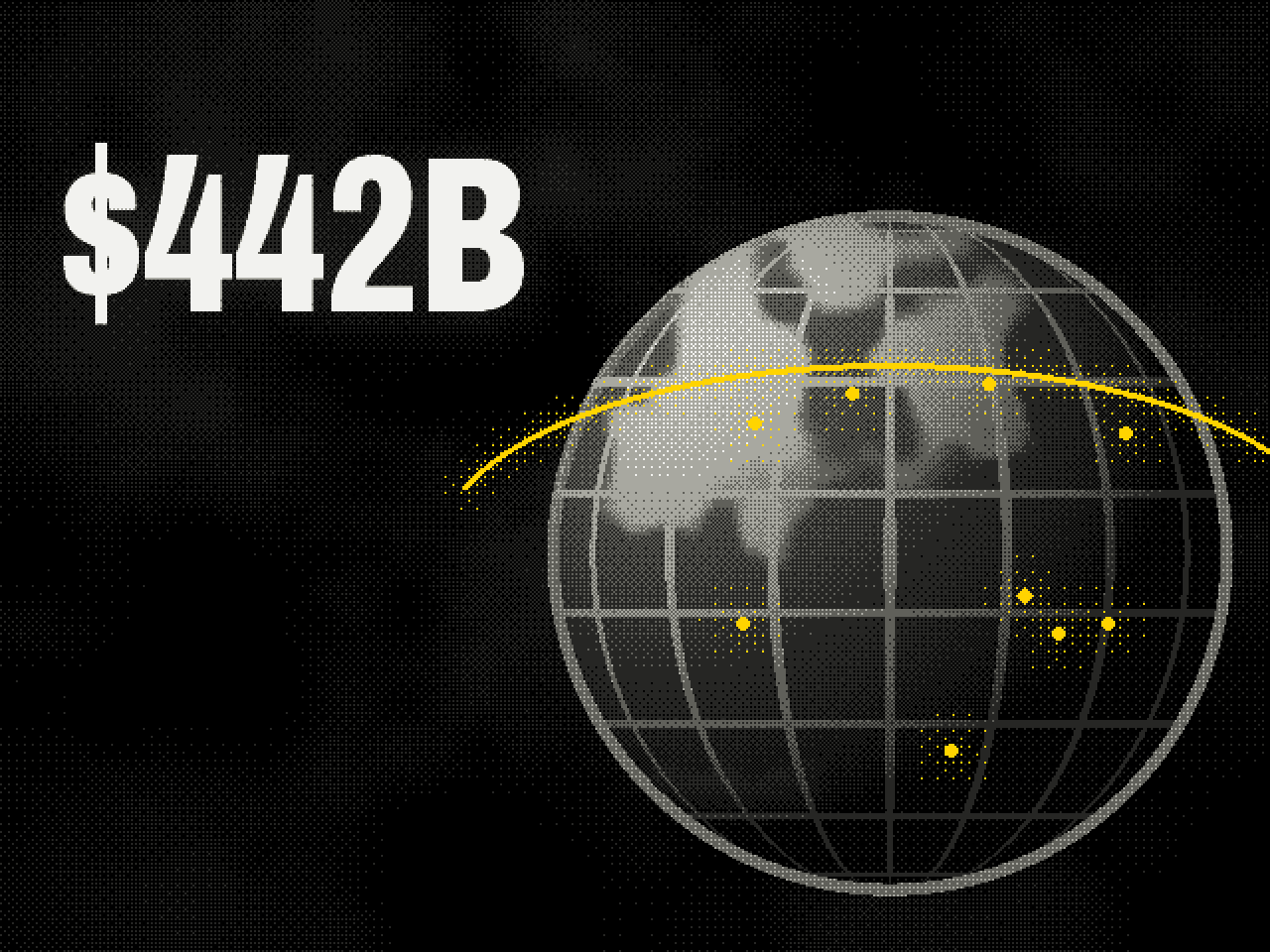
- lost to scams worldwide in a year (survey estimate)
- $442B
- reported to the FBI by Americans in 2025
- $20.9B
- reported to the FTC by Americans in 2025
- $15.9B
- reported to the FBI by people aged 60 and over
- $7.75B
- lost to fraud in the UK in 2025
- £1.28B
- lost to scams in Australia in 2025
- A$2.18B
The global picture
The widest measure comes from the Global Anti-Scam Alliance, which surveyed 46,000 adults in 42 markets for its 2025 report. Seventy percent said they had encountered a scam in the past year, 57% said they had a scam experience, and 23% lost money. In South America and Africa, 41% lost money.15
Projected across those markets, the survey puts the yearly loss at $442 billion. That is the figure behind the live counter at the top of ScamMarketCap. It is an estimate from a survey, not a count of reported cases, so it moves with the method: the same series put the figure at $1.03 trillion a year earlier.16
The most common scams in the survey were shopping scams (54% of people who had a scam experience), investment scams (48%) and "unexpected money" offers (48%). They arrived by phone (53%), text message (51%) and email (47%).5
Getting money back is rare. Seventy-four percent of victims reported the scam to their bank or payment provider, and 30% recovered at least part of what they lost.5 In the alliance's previous report, only 4% recovered their money.6
The United States: reported losses doubled in three years
Americans filed 1,008,597 complaints with the FBI's Internet Crime Complaint Center in 2025, about one every 31 seconds, and reported $20.9 billion in losses. In 2022 the figure was $10.3 billion.2
Losses reported to the FBI, by year
Show the numbers as a table
| Year | Reported losses |
|---|---|
| 2019 | $3.5 billion |
| 2020 | $4.2 billion |
| 2021 | $6.9 billion |
| 2022 | $10.3 billion |
| 2023 | $12.5 billion |
| 2024 | $16.6 billion |
| 2025 | $20.9 billion |
Total losses in complaints to the FBI Internet Crime Complaint Center, in billions of US dollars.
Investment fraud is the largest category by far. Phishing produces the most complaints, but small losses each.2
| Crime type (FBI, 2025) | Losses | Complaints |
|---|---|---|
| Investment fraud | $8.65B | |
| Business email compromise | $3.05B | 24,768 |
| Tech support scams | $2.13B | 47,794 |
| Personal data breach | $1.31B | |
| Romance and confidence scams | $929M | |
| Government impersonation | $798M | |
| Phishing and spoofing | 191,561 |
The FTC, which collects consumer reports separately, recorded 3 million fraud reports and $15.9 billion in losses for 2025, up about 430% since 2020. Investment scams accounted for more than $7.9 billion, about half the total, and impostors posing as banks, companies and government agencies for more than $3.5 billion.73 Bank transfers produced the largest losses, followed by cryptocurrency.7
Social media has become the most expensive way scammers reach people: $2.1 billion in reported losses in 2025, eight times the 2020 figure.8 One caveat: the FTC took no reports between 1 October and 13 November 2025, during a federal funding lapse, so its 2025 total is understated.4
Older adults lose the most per person
People aged 60 and over reported $7.75 billion in losses to the FBI in 2025, up 59% from the year before. The average loss was $38,500, and 12,444 people lost more than $100,000.2
FTC data shows the same pattern from a different angle. Older adults report losing money less often than younger people, but when they do, the losses are larger: reports of six-figure losses are 6% of older adults' loss reports and 70% of the money they lost.4
Cryptocurrency kiosks, the "bitcoin ATMs" in convenience stores, are a big part of it. Americans reported $389 million in kiosk losses to the FBI in 2025, up 58%, and about two-thirds of it was lost by people over 60.2 Indiana banned the machines in March 2026, Tennessee in July and Minnesota in August.91011
Crypto is now the rail for the biggest losses
Complaints involving cryptocurrency accounted for $11.37 billion of the FBI's 2025 total, up 22%, across 181,565 complaints. Crypto investment fraud alone was $7.23 billion. The FBI attributes much of it to crime groups in Southeast Asia that use trafficked workers to run the scams.2 We cover the crypto numbers, including the record Binance hack, in Crypto scams and hacks: the 2025-2026 numbers.
The UK and Australia
UK Finance counted £1.28 billion stolen through fraud in 2025, across 4.06 million cases. Authorised push payment fraud, where people are tricked into sending money themselves, rose 19% to £576.4 million. Investment scams were the largest type at £221.5 million, up 40%.12
The UK is also the clearest test of what refunds can do. Since October 2024, banks there must reimburse most victims of authorised push payment fraud. In 2025, 61% of all such losses were returned, and 88% of the losses covered by the new rules.12
Australians lost A$2.18 billion to scams in 2025, up 7.8% on 2024 but well below the A$3.1 billion peak in 2022. Investment scams again cost the most, at A$837.7 million.13
Five trends behind the numbers
- AI is now in the official statistics. The FBI broke out AI-related complaints for the first time: 22,364 complaints and $893 million in losses.2
- Impersonation is growing fastest. Americans reported more than $3.5 billion lost to impostors, and crypto scams that impersonate companies and officials grew about 1,400% in a year.314
- Scams are run like industries. Investigators tie much of the investment fraud to scam compounds in Southeast Asia. In October 2025 the US filed a forfeiture action for about 127,271 bitcoin against Prince Group, the largest in its history. Read our investigation.
- Fewer, bigger losses. Six-figure losses are a small share of reports and most of the money.4
- Victims are targeted twice. Recovery scams, often posing as law firms or "fund recovery" services, cost Americans $1.4 billion in 2025.2 Lawyers listed on ScamMarketCap have their bar membership checked before they get a check mark.
What the numbers miss
Reported losses are a fraction of real ones. The FTC estimates that only about 4.8% of fraud victims complain to a government agency or the Better Business Bureau.7 Once unreported fraud is counted, it puts the true cost to Americans in 2025 at somewhere between $38.1 billion and $261.5 billion.4
That gap is why ScamMarketCap exists. A scam that looks like one person's bad luck often turns out to be a pattern with hundreds of victims, and the pattern only becomes visible when they find each other. See how our live counter is calculated, browse the biggest scams on record, or look at the latest reports.
If it happened to you
- Report it to the authorities: ic3.gov and ReportFraud.ftc.gov in the US, your bank and Report Fraud (formerly Action Fraud) in the UK, Scamwatch in Australia.
- Call your bank or payment provider the same day. Speed matters: the FBI froze 58% of the money it tried to stop in 2025 when victims reported quickly.2
- Report it on ScamMarketCap to find the other people it happened to, and read our guide to getting your money back.
Sources
-
Global scams on the rise: over half of adults worldwide report scam encounters, Global Anti-Scam Alliance, 7 October 2025. ↩ ↩2 ↩3
-
2025 Internet Crime Report, FBI Internet Crime Complaint Center, 6 April 2026. ↩ ↩2 ↩3 ↩4 ↩5 ↩6 ↩7 ↩8 ↩9 ↩10 ↩11
-
FTC data show people reported losing $3.5 billion to impostor scams in 2025, US Federal Trade Commission, 15 June 2026. ↩ ↩2 ↩3
-
Protecting Older Consumers 2025-2026, US Federal Trade Commission, 19 October 2026. ↩ ↩2 ↩3 ↩4 ↩5
-
Global State of Scams 2025, Global Anti-Scam Alliance and Feedzai, October 2025. ↩ ↩2 ↩3
-
GASA Global State of Scams Report 2024: $1.03 trillion lost to scams, Feedzai, 19 November 2024. ↩ ↩2
-
Prepared statement on "The Rising Scam Economy", US Federal Trade Commission, testimony to the Joint Economic Committee, 25 March 2026. ↩ ↩2 ↩3
-
Reported losses to scams on social media eight times higher than 2020, US Federal Trade Commission, 27 April 2026. ↩
-
Indiana prohibits virtual currency kiosks, National Law Review, 28 March 2026. ↩
-
Tennessee enacts law prohibiting virtual currency kiosks, Orrick InfoBytes, 16 April 2026. ↩
-
Banning crypto kiosk fraud in Minnesota, AARP, 2026. ↩
-
Annual Fraud Report 2026, UK Finance, 15 June 2026. ↩ ↩2
-
Scams cost Australians over $2bn in 2025, says ACCC, Cyber Daily, 30 March 2026, reporting the National Anti-Scam Centre's Targeting Scams report. ↩
-
Crypto scams in 2025, Chainalysis, 13 January 2026. ↩